
Unlocking the Secret of Limestone Grinding: Vertical Mill – The Core Answer to High Efficiency and Energy Conservation
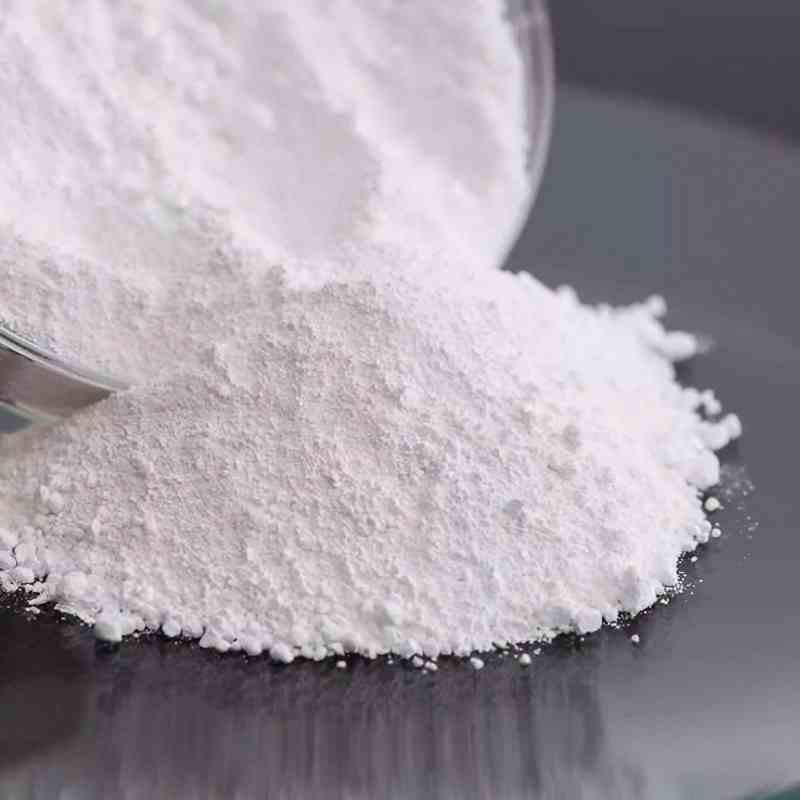
Limestone is a carbonate rock with calcite as its main component. Sometimes it contains dolomite, clay minerals and detrital minerals, and has various colors such as gray, grayish white, grayish black, yellow, light red and brownish red. Its hardness is generally not high and it has a vigorous chemical reaction with dilute hydrochloric acid to produce bubbles. Classified by genesis, it belongs to the major category of sedimentary rocks.
Limestone is a common non-metallic mineral and a valuable resource with extremely wide applications. After being ground and processed by a grinding mill, limestone can be applied in many fields and achieve considerable economic benefits. It is the main raw material for manufacturing cement, lime and calcium carbide, and is also widely used in metallurgy, chemical engineering, building materials, desulfurization in power plants and other industries.
With the tightening of environmental protection policies, the deep processing industry of lime has attracted much attention in recent years. In addition to traditional construction, metallurgy and agriculture and forestry, the application of lime in environmental protection fields such as sewage treatment and flue gas desulfurization is also becoming increasingly widespread. Deep processing of lime mainly refers to the processing and application from limestone to lime. Simply put, limestone is calcined to become lime, whose main component is calcium oxide, also known as quicklime. Quicklime, after being digested by adding water, turns into slaked lime, whose main component is calcium hydroxide.
Application fields of limestone
Youdaoplaceholder0 produce calcium oxide
Calcium oxide is obtained by calcining limestone at high temperatures and is commonly known as quicklime. Calcium oxide has a wide range of applications in industry, such as being used as an alkaline oxide in environmental protection fields like industrial wastewater treatment, waste incineration, and flue gas desulfurization. In addition, calcium oxide is widely used in fields such as expressways, high-speed railways, construction, plastics, rubber, food, and medicine.
Produce calcium hydroxide
Calcium hydroxide is produced by the digestion of calcium oxide with water and is commonly known as slaked lime or hydrated lime. Calcium hydroxide can be used as an acidity regulator in food and has functions such as buffering, neutralization and solidification. It is also widely used in the production of calcium supplements, pharmaceuticals, the synthesis of food additives, and the synthesis of high-tech biomaterials, etc.
Rubber industry
In the rubber industry, the addition of calcium carbonate can enhance the dispersibility, vulcanization elongation, tear resistance and other properties of rubber products. The addition of calcium carbonate can improve the processing performance and physical properties of rubber.
Youdaoplaceholder0 plastics industry
Calcium carbonate can increase the volume of plastics, reduce product costs, and enhance the dimensional stability, hardness and rigidity of plastics. It also improves the processing performance, heat resistance and light scattering performance of plastics.
Other fields
Limestone can also be used to produce nano calcium carbonate, a functional inorganic filler with a particle size of 1-100nm, which is widely applied in rubber, plastics, papermaking, inks, coatings, sealants and adhesives, medicine, toothpaste, food and other fields. In addition, limestone itself, as a kind of carbonate rock, also has its basic applications in construction and road building.
Deep processing of limestone grinding
Calcination
The selected limestone is sent into an environmentally friendly lime kiln for high-temperature calcination to become quicklime.
Grinding
Quicklime can be directly crushed by European version mills or vertical mills, and processed from block lime into powder lime, which can be directly supplied to the market.
Digestion
Quicklime can also be further processed and sent to the calcium hydroxide production line, where it undergoes five stages of digestion (stage 1 pre-treatment – stage 3 homogenization – stage 1 pulverization) to become slaked lime.
Select followers + Collect
The well-digested slaked lime can be directly screened through a powder separator. After collection, it becomes high-quality calcium hydroxide products, and the excess residue is discharged.
Grinding + classification + collection
The well-digested slaked lime can also be crushed by a Raymond mill. After the fineness is qualified, it is screened out by a classifier and collected in a dust collector, which is the finished product of ordinary calcium hydroxide.
Integrated solution for limestone grinding
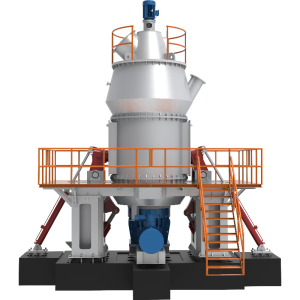
As a provider of overall solutions for grinding equipment, cronus has been committed to developing more efficient, energy-saving and environmentally friendly grinding equipment. With nearly 40 years of experience in the design, research and development, and manufacturing of grinding mills, it has launched different models of grinding mills to meet the preparation of limestone powder of different particle sizes. Moreover, it has low construction costs and is environmentally friendly, making it an ideal choice for customers.
To fully realize the economic potential of limestone and translate it into tangible profits, selecting appropriate grinding equipment is crucial. Cronus provides not only advanced vertical roller mills and European-style crushers, but also comprehensive turnkey solutions encompassing project planning, manufacturing, installation, and ongoing technical support. Our team of experts will design a customized, cost-effective, and highly efficient production line tailored to the specific characteristics of your raw materials and the quality requirements of your final products.

We invite you to take immediate action and advance toward a new era of grinding efficiency.
