
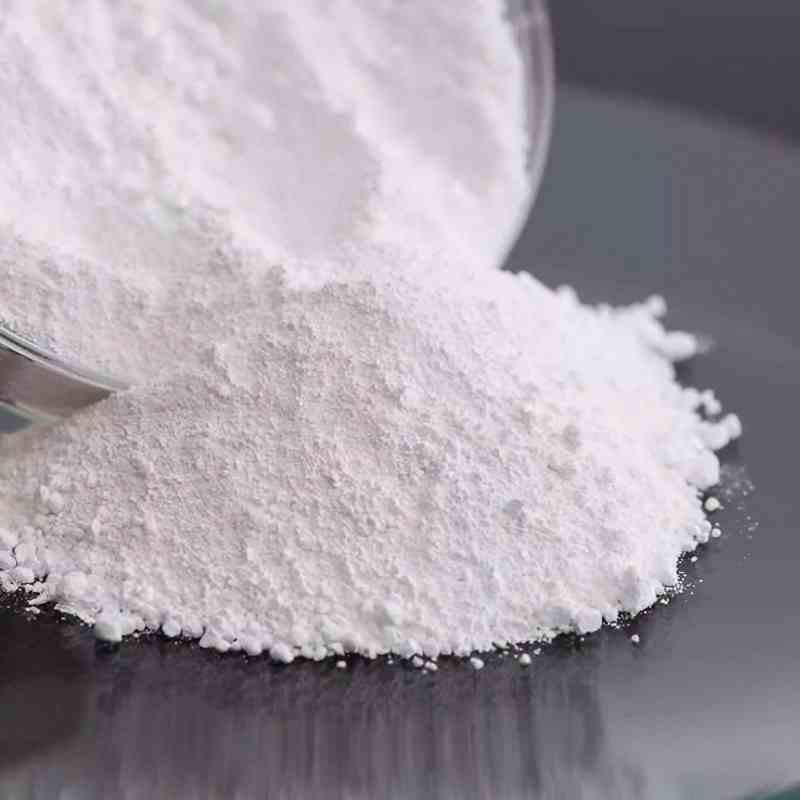
Introduction to the Uses and Processing of Calcium Carbonate Powder
What are the uses of calcium carbonate powder?
Calcium carbonate powder is a versatile material; it is a naturally occurring compound found abundantly within rock formations. Limestone, marble, chalk, and aragonite are all common minerals composed of calcium carbonate.
This product presents as a white powder that is odorless, tasteless, and insoluble in water, though it is soluble in acids. It finds application across a wide array of industries.
Primary Natural Sources of Calcium Carbonate Powder
Limestone: Classified as a sedimentary rock, it serves as the most common source of raw material for calcium carbonate production.
Marble: Classified as a metamorphic rock, it is frequently utilized in the fields of architectural decoration and sculpture.
Chalk: Characterized by its soft, porous texture, it is formed from the sedimentary accumulation of marine organism fossils and is considered a variety of limestone.
Aragonite and Calcite: These represent distinct crystalline forms of calcium carbonate.
The Wide-Ranging Applications of Calcium Carbonate Powder
What is calcium carbonate powder used for?
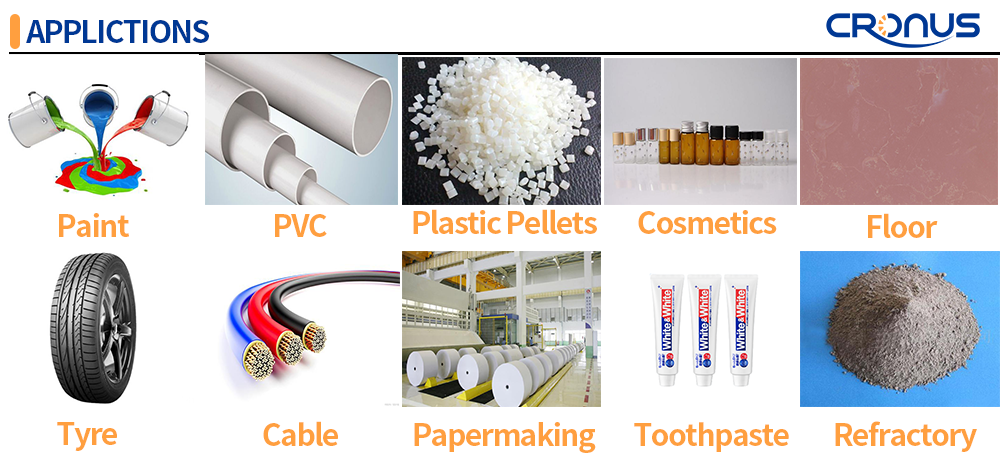
| Industry Sector | Main Application | Specific Role & Effect |
|---|---|---|
| Construction Industry | Key concrete filler | Acts as aggregate or admixture to improve concrete workability and volume stability |
| Construction Industry | Core raw material for cement production | Provides calcium components; serves as the main mineral source for Portland cement clinker |
| Construction Industry | Additive for wall and ceiling coatings | Enhances hiding power and scrub resistance of coatings; improves application手感 (workability) and film texture |
| Paper Industry | Coating agent and filler | Increases paper whiteness, brightness, and opacity; enhances print contrast; improves surface smoothness for high-demand printing |
| Plastics Industry | High-cost-performance filler | Enhances structural strength and rigidity of products; optimizes dimensional stability; improves physical properties of finished goods |
| Agriculture | Soil conditioner | Neutralizes acidic soil; supplies calcium; improves soil structure; enhances nutrient utilization efficiency |
| Cosmetics & Personal Care Industry | Multifunctional raw material | Acts as a mild abrasive in oral care products; serves as a texture filler in color cosmetics; functions as an exfoliating ingredient in skincare products |
How is Calcium Carbonate Powder Produced and Processed?
The preparation of calcium carbonate powder requires a fine grinding process. Cronus Machinery offers a complete production line for calcium carbonate grinding; the full processing workflow is outlined below:
Raw Material Preparation
The production of high-quality calcium carbonate powder begins with the selection and pretreatment of raw materials; the primary raw materials utilized are limestone, calcite, and marble.
| Process Name | Process Content | Purpose & Effect |
|---|---|---|
| Mining & Sorting | Mining raw stone from the quarry; screening and washing to remove impurities such as clay and sand | Ensures product purity; provides clean raw materials for subsequent processing |
| Drying Treatment | Drying the washed raw materials | Prevents moisture from affecting production during the grinding process; ensures powder flowability |
| Crushing Process | Primary crushing: Jaw crusher breaks large raw stones into coarse aggregates Secondary fine crushing: Hammer crusher reduces materials to a particle size suitable for the feed requirements of the grinding mill | Reduces particle size step by step; creates optimal feed conditions for subsequent fine grinding |
Grinding ProcessGrinding is the most core link in calcium carbonate powder production, and the ball mill is the preferred equipment. It can produce high-fineness powder, is suitable for materials with Mohs hardness below 7, and is also the most mainstream grinding equipment in the current market.After crushing, the materials are stored in a silo, and then fed into the ball mill at a constant speed by a vibrating feeder. The equipment relies on the impact and grinding action of the rotating drum and grinding media to grind the materials into powder. The finished particle size can be controlled as required by adjusting the rotating speed, grinding time and grinding media specifications.
Classifying, Re-grinding and Dust CollectionDust collection equipment is equipped at the end of the production line, which can realize dust-free collection of finished powder with environmental protection and no pollution.An air classifier is optional for precise classification of powder particle size, and the classification specification can be set freely. Oversized powder that does not meet the particle size standard can be recycled back to the ball mill for re-grinding, eliminating raw material waste.
Cronus Machinery’s complete calcium carbonate powder production line features high product uniformity, energy efficiency and minimal waste. For industries with tailored powder specification requirements, the parameters of the mill machine, classifier and grinding media configuration can be flexibly adjusted. Welcome to contact us for customized solutions for your exclusive calcium carbonate powder processing plant.
What is Coated Calcium Carbonate Powder Used for?
Coated calcium carbonate powder is a deep-processed modified product based on standard calcium carbonate, with its particles undergoing surface coating treatment with additives such as stearic acid, silane and titanate.
Through coating modification, the compatibility, dispersibility and application performance of the powder can be greatly improved, with remarkable application advantages:
Plastics and Polymer Industry
It is used as a filler and reinforcing additive, which can improve the mechanical properties of plastic products such as tensile strength and impact resistance, enhance heat stability and reduce shrinkage rate. It can also replace high-priced resin raw materials to effectively reduce production costs, and is widely used in the production of PVC pipes, profiles, films, as well as Polypropylene (PP) and Polyethylene (PE) products.
Rubber Industry
It is used as a reinforcing filler for rubber products such as tires, seals and hoses. With coated calcium carbonate powder, the abrasion resistance of the products is increased, and the tear strength and elasticity are improved. Compared with carbon black raw material, coated calcium carbonate powder can significantly reduce production costs.
Paints and Coatings Industry
It is used as an extender pigment and matting agent. When used in paints and coatings, it can improve the opacity and weather resistance of the coating film. At the same time, it can enhance the dispersion of the powder, prevent clumping and sedimentation, and help adjust the gloss level of the coating film. Whether for matte or semi-gloss finish requirements, the adjustment can be achieved by using coated calcium carbonate powder.
Paper Industry
Its main function in the paper industry is to improve the brightness, smoothness and printability of paper, while reducing wood pulp consumption and saving production costs.
Coating Modification Process of Calcium Carbonate Powder
Cronus Machinery can provide professional calcium carbonate coating modification equipment, and the complete process flow is as follows:
Feeding and Mixing: The bucket elevator transports the GCC (Ground Calcium Carbonate) powder produced by the ball mill to a storage silo. The metered GCC powder and coating additives such as stearic acid are pre-mixed in a screw mixer, and then the mixture is pneumatically conveyed into the coating machine by a blower.
Coating Process: Inside the coating machine, a high-speed vortex system is adopted to realize thorough blending and pulverization of the materials and additives, enabling uniform coating on the surface of calcium carbonate particles.
Classification and Recycling: After coating, the coated powder is sent to the classifier by airflow, and the particles are precisely sized through the air classifier. The fine and properly coated GCC powder is delivered to the product silo, and a dust collector is equipped to complete the dust-free collection of these powders. Particles with oversized size or insufficient coating will be rejected and recycled back into the coating machine for reprocessing.
Cronus Machinery can provide a complete set of coated calcium carbonate powder production line from crushing, grinding to coating modification, with a full range of crushers, grinding mills and coating machines available for selection. We can also provide quartz powder grinding production lines and talc powder production lines, which are widely favored by our customers, especially in overseas markets such as Egypt.
If you have the demand for setting up a factory, please feel free to contact us at any time. Our engineers can custom-design a complete solution for your calcium carbonate grinding and processing plant according to your factory size and site layout.