
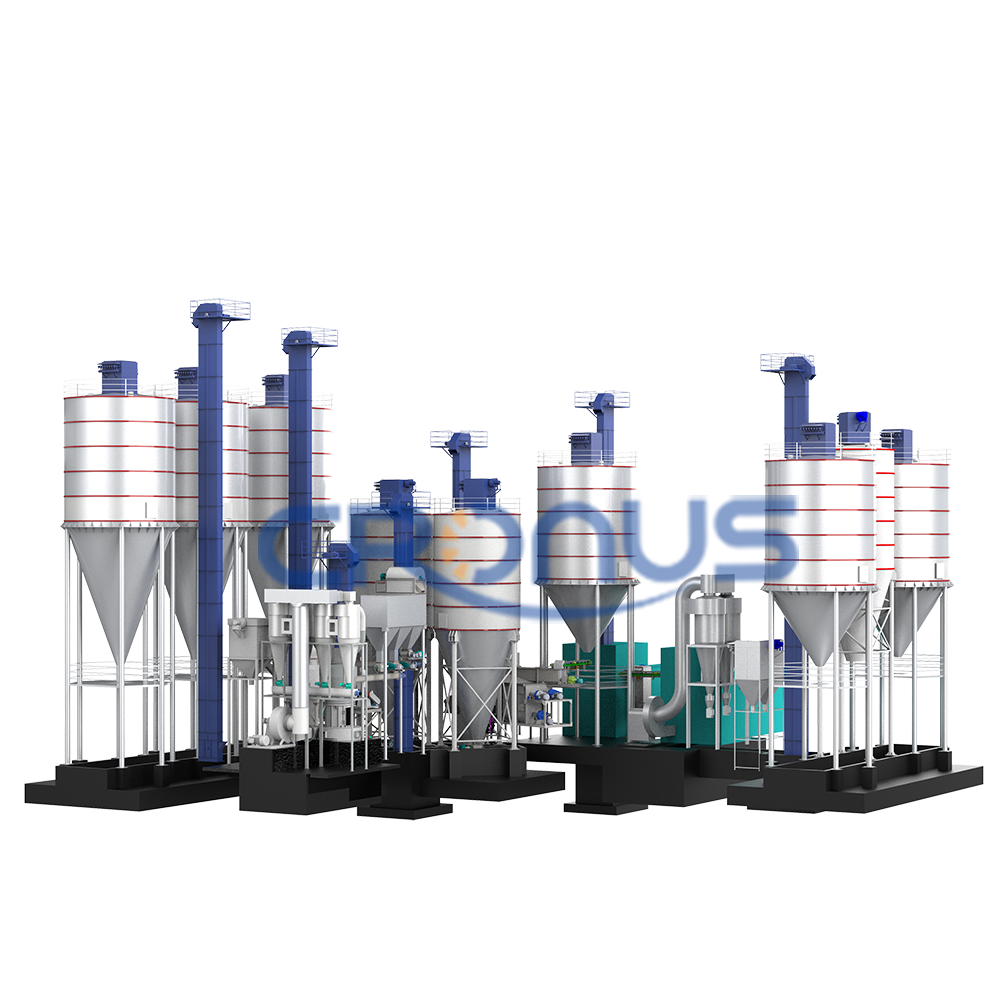
Wet modification: Breakthrough in High Specific surface area calcium hydroxide technology
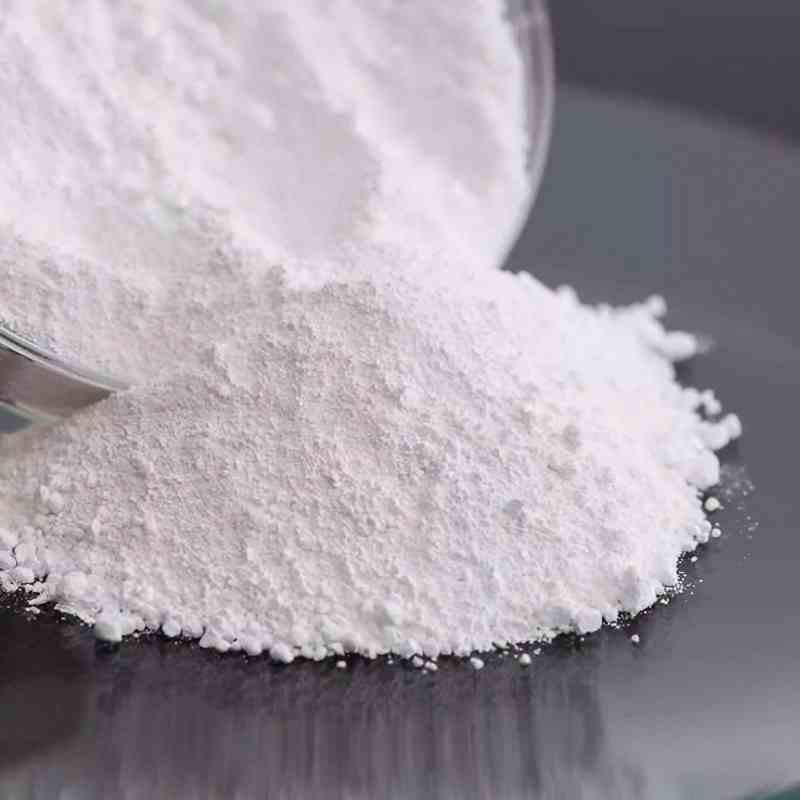
Calcium hydroxide, as an inorganic powder material with excellent cost performance, plays an indispensable role in many fields such as construction, coatings, water treatment and environmental pollution control, thanks to its wide distribution of raw materials and simple synthesis process. Especially in the field of dry and semi-dry flue gas desulfurization, calcium hydroxide, as the core absorbent, its performance directly determines the desulfurization efficiency and purification effect. As a key indicator for measuring the reactivity of calcium hydroxide, how to enhance its specific surface area through technological innovation has become an important direction for technological upgrading in the industry.
Relying on high-quality raw materials and innovative processes, the Cronus R&D team has made a significant breakthrough in the preparation technology of high specific surface area calcium hydroxide. Using high-quality limestone as raw material, through key processes such as calcination, crushing, and wet digestion, and innovatively introducing hydroxyl-containing organic compounds as modifiers, calcium hydroxide products with excellent dispersion and significantly increased specific surface area have been successfully prepared, providing a core material with better performance for high-end application scenarios such as flue gas purification.
Core technology: Innovative breakthrough in wet modification process
The traditional preparation of calcium hydroxide mostly adopts the direct digestion process with quicklime. The product is prone to agglomeration and has a limited specific surface area, making it difficult to meet the performance requirements of high-end fields. In response to this pain point, the Cronus R&D team has established a full-process technical system of “raw material selection – precise calcination – wet modification – precise characterization”. The core innovation points are as follows:
- High-quality raw materials ensure basic performance
High-quality limestone is carefully selected. After testing, it is found that its main component is high-purity calcite (CaCO₃), laying a solid foundation for the subsequent preparation of highly active products. By precisely controlling the calcination parameters (calcination at 1100℃ for 10-15 minutes), high-quality chemical quicklime raw materials with an activity of 408.7mL and an effective calcium content of 92.25% were prepared, far exceeding the industry average.
- Precise control of wet modification process
In an 80℃ water bath environment, quicklime and distilled water were mixed in an optimized proportion. Three hydroxyl-containing organic compounds, namely propylene glycol, triethanolamine and polyethylene glycol (1000), were innovatively introduced as modifiers. Through precise control of subsequent treatments such as constant speed stirring at 300r/min for 1 hour, aging for 4 hours and vacuum drying at 105℃, Achieve directional regulation of calcium hydroxide crystal growth.
- Multi-dimensional characterization ensures product performance
A comprehensive characterization system was constructed by using X-ray diffractometer (XRD), scanning electron microscope (SEM) and specific surface area analyzer (BET) to accurately detect the phase composition, microstructure and specific surface area of the product, ensuring the controllable and stable performance of the product.
Key achievements: Screening and performance optimization of modifiers
The R&D team systematically studied the influence of different types of modifiers and their dosages on the specific surface area of calcium hydroxide, forming core technical parameters to provide precise guidance for industrial production
- The optimal selection of modifier types
A comparison of the effects of three hydroxyl-containing organic modifiers revealed that propylene glycol and triethanolamine could significantly increase the specific surface area of calcium hydroxide, while polyethylene glycol (1000) showed an inhibitory effect. Among them, the modification effect of propylene glycol is the most prominent. Under the same addition amount, it can make the specific surface area of the product reach a higher level.
- Precise control of the dosage of modifiers
Dosage optimization experiments were carried out for the optimal modifier. The results showed that when the addition amount of propylene glycol was 10% of the mass of lime, the specific surface area of the product reached 47.4156m²/g, achieving a significant increase compared to the product without the modifier. When the addition amount of triethanolamine is 5% by the mass of lime, the specific surface area of the product can also reach an excellent level of 44.4442m²/g, providing diverse options for different application scenarios.
- The microstructure of the product has significant advantages
SEM microscopic analysis shows that the calcium hydroxide without modifiers has larger grains and obvious agglomeration, while the product treated with modifiers such as propylene glycol presents a clear lamellar structure, smaller grain size, and a large number of uniform micropores distributed between the grains. This unique microstructure provides abundant active sites for the reaction, fundamentally enhancing the reactivity of the product. XRD phase analysis confirmed that the main phase of the modified product was still high-purity calcium hydroxide, ensuring the core application performance of the product.
Application value: Empowering high-quality development in multiple fields
The high specific surface area calcium hydroxide products developed by Cronus, with their excellent reactivity and stable performance, have demonstrated broad application prospects in multiple fields: in the field of flue gas desulfurization, they can significantly increase the absorption rate of acidic gases, reduce the dosage of absorbents and operating costs, and help enterprises achieve environmental protection compliance and efficiency improvement. In the field of water treatment, it can more efficiently adsorb heavy metal ions and pollutants in water, enhancing the purification effect of water quality. In fields such as coatings and construction, it can improve the dispersibility and mechanical properties of products, and enhance the quality of end products.
In the future, Cronus will continue to promote the industrial transformation of this technology, optimize production processes, expand product application scenarios, and drive with innovative technologies to provide more competitive products and solutions for industry customers, working together to promote green, low-carbon and high-quality development.