
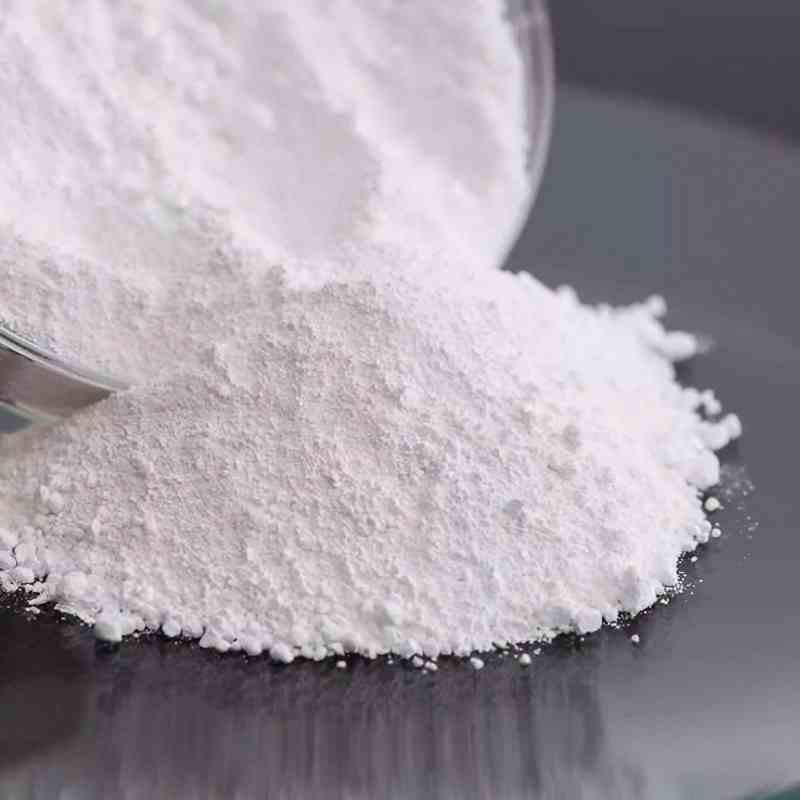
Calcium hydroxide Production: Analysis of the Selection of Integrated Grinding Machines and powder separators
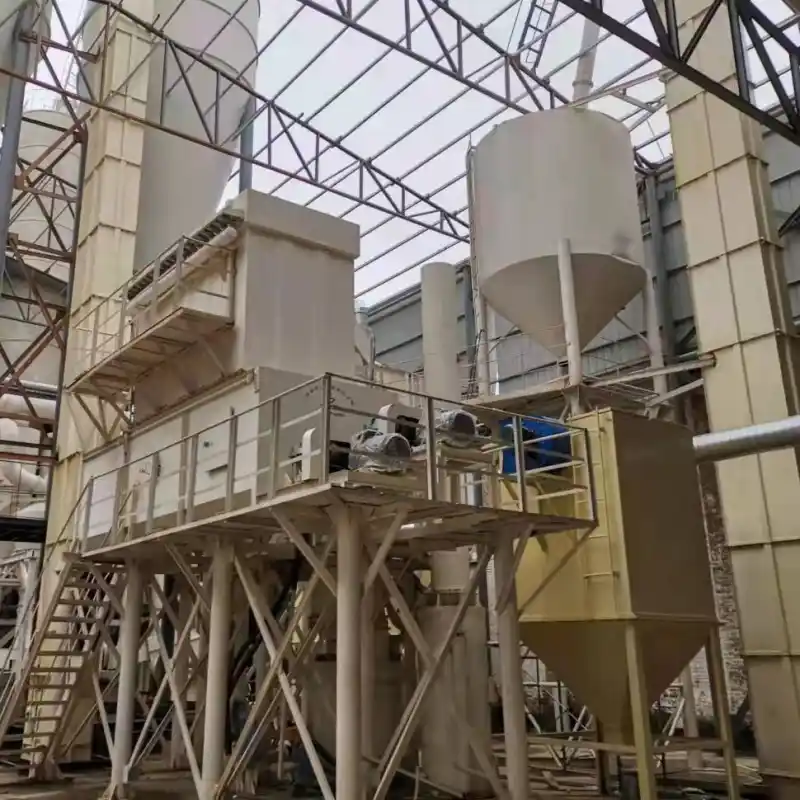
In the production of calcium hydroxide, the selection of the integrated grinding and selection machine and the powder separator directly affects the production efficiency, product quality and overall cost. The core functions of the two are significantly different, and their applicable scenarios have their own emphases. A comprehensive judgment should be made based on three core dimensions: raw material status, product fineness requirements, and production scale. The specific analysis is as follows:
I. Core Functional Differences
Select an integrated grinding and classification machine: It integrates grinding and classification
Core advantages:
It integrates grinding mechanisms such as extrusion and impact with classification functions, enabling direct processing of block or coarse-grained raw materials to the target fineness (80-600 mesh) without the need for additional classification equipment.
Applicable scenarios:
Scenarios where the initial particle size of raw materials is large (such as block limestone) and the production process needs to be simplified; The equipment has a high degree of integration and can significantly save factory space.
Equipment representative:
Taking the Raymond mill as a typical example, it is suitable for medium and small-scale production, and the equipment investment and operation cost are both cost-effective. The vertical mill can simultaneously process high-moisture raw materials (drying + grinding).
Powder separator: Focused on precise classification
Core advantages: No grinding capability, focusing on the powder classification process; Through air flow separation or the action of centrifugal force, the ground coarse powder is precisely separated according to particle size to remove the excessive coarse powder or impurities, ensuring the uniformity of the product particle size.
Applicable scenarios: Scenarios where the raw materials already have the basic fineness (fine powder after preliminary grinding), and it is necessary to strictly control the particle size distribution (200-325 mesh) or improve the purity of the product.
Equipment representative: The cyclone separator achieves efficient classification through high-speed airflow, is energy-saving and environmentally friendly, and can meet the particle size accuracy requirements of strict applications such as flue gas desulfurization and high-end building materials.
Ii. Applicable Scenarios and Selection Logic
For raw materials in block or coarse granular form: A combined grinding machine is preferred
It can directly complete the entire process of “coarse crushing – grinding – classification”, avoiding the cost increase and process complexity caused by the series connection of multiple devices. For instance, in large-scale production lines, vertical mills are selected, which can simultaneously achieve drying and grinding classification, thereby enhancing the overall production efficiency.
If the raw material is fine powder or requires fine classification: A powder separator is a must
When only the particle size distribution needs to be optimized or impurities need to be removed, it is more economical and efficient to use a separate powder separator. Especially in high-end application scenarios, it can precisely control the particle size range, improve the product qualification rate, and meet the strict standards of downstream industries.
High-precision/large-scale production: The combination of “grinding mill + powder separator” is the best
A closed-loop circulation system is adopted: the grinding mill is responsible for the initial grinding, the classifier precisely classifies, and the coarse powder that exceeds the standard is returned to the grinding mill for re-grinding. Although the initial equipment investment is relatively high, it can achieve centralized and stable control of particle size, with significant advantages in product quality and production efficiency, and is suitable for large-scale mass production needs.
Iii. Key Considerations
Raw material characteristics: When there are lumps, impurities or the initial particle size is large, the grinding function should be prioritized (select an integrated grinding machine or a separate grinding machine). For the fine powder raw materials after pretreatment, it is more cost-effective to directly use a powder separator.
Production scale: For medium and small-scale production (annual output less than 50,000 tons), an integrated grinding and selection machine can be selected to balance cost and efficiency. For large-scale production (with an annual output exceeding 100,000 tons), it is recommended to adopt a combination of “grinding mill + classifier” to ensure the stability of production capacity and quality.
Product requirements: For scenarios with loose particle size requirements such as ordinary building materials, a grinding and grinding integrated machine can meet the needs. In scenarios such as flue gas desulfurization and food additives, where there are strict requirements for particle size uniformity and purity, powder separators or combined systems need to be configured.
Iv. Conclusion
When the raw materials are coarse-grained and the production scale is relatively small, the grinding and grinding integrated machine is both highly efficient and convenient. If high precision of the product is pursued or large-scale production is required, it is more advantageous to use the classifier alone or in combination with the grinding mill. It is recommended to combine the actual production needs, balance cost and quality, and customize the configuration of the production line.